Public-Key Encryption

Jed Rembold

December 6, 2023

Announcements

  • Project 5 due tonight!
    • If you worked with a partner, make sure both of you are added to the GitHub group
  • Do you still have late work to be turned in? The last day I’ll be accepting anything will be Sunday night at midnight.
  • Final!
    • Initial Final Exam study materials posted!
      • More coming later today (as well as solutions)
    • Our Final is next Wednesday at 8am in here!
    • I’ll largely be around in the afternoons on Thur/Fri and Mon/Tues next week if you have questions

Public-Key Encryption

  • In 1999, Harvard Law professor Larry Lessig publish Code and Other Laws of Cyberspace
  • Argues that cryptography is the most revolutionary development of the last millennium.
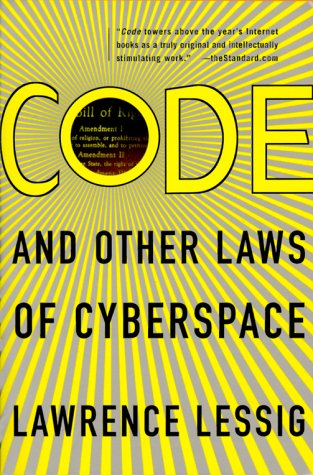
 

Here is something that will sound very extreme but is at most, I think, a slight exaggeration: encryption technologies are the most important breakthrough in the last thousand years. No other technological discovery… will have a more significant impart on our social and political life. Cryptography will change everything.

Idealized Encryption

Searching for the Perfect Code

  • The problem does have a solution, in theory
  • Have receiver and sender share a codebook with the following properties:
    • The codebook is so large that none of it is every reused
    • The mapping of plaintext letters is random in the sense that past mappings convey no information about later ones
  • Since individual entries are never reused, the approach is generally called a one-time pad.
    • Also called a Vernam cipher after Gilbert Vernam, an engineer at AT&T Bell Labs who patented the technique in 1917

One-Time Pads

  • One-time pads have been used in practice on several occasions:
    • The Soviet Union used a one-time pad for communications in World War II.
    • When Che Guevara was killed by the CIA in Bolivia in 1968, he was carrying a one-time pad he used to communicate with Fidel Castro
  • In practice, the one-time pad is problematic because of the size of the codebook and the difficulty in distributing it securely.
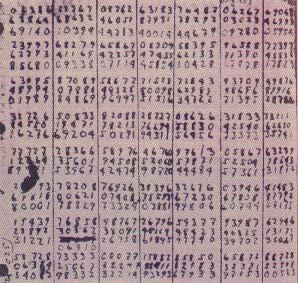
One-time pad of Che Guevara

Solving Key Distribution

  • The problem of distributing encryption keys is difficult only if the keys must be kept secret.
  • The ideas that keys can be made public can seem crazy at first. Then anyone could use it!
  • But if knowing the public key only lets some encrypt a message, and only the intended recipient can decrypt the message, then it really isn’t a problem!
  • A coding strategy that allows encryption keys to be shared but protects decryption keys is called public-key encryption.

Public-Key Encryption

RSA

  • In 1977, a team consisting of Ron Rivest, Adi Shamir, and Len Adleman (all then at MIT) developed a practical implementation of public-key encryption
    • Termed RSA after their initials
  • RSA relies on the difficulty of factoring large numbers
    • Given a large number (hundreds of digits), it is difficult to determine what two prime numbers were multiplied to get that number
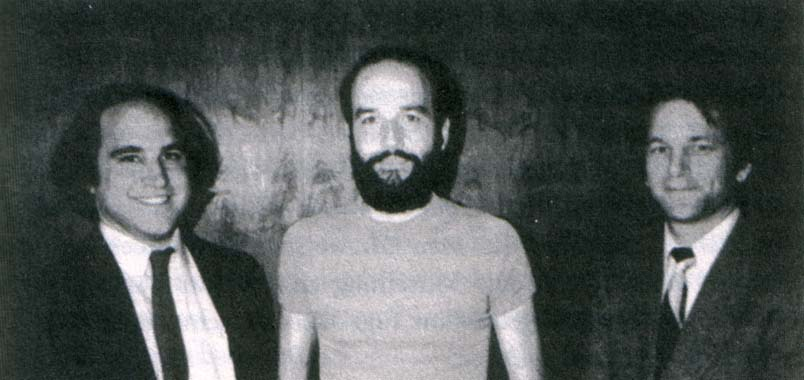

The RSA Trio

RSA Key Generation

  • Need to generate two keys: a public key to encrypt and a private key to decrypt
  • Generating keys takes the following steps:
    1. Choose two prime numbers \(p\) and \(q\)
    2. Define the variable \(n\) as \(pq\) and the variable \(t\) as \((p-1)(q-1)\)
    3. Choose an integer \(d < n\) so that \(d\) is relatively prime to \(t\)
      • Two integers are relatively prime if they share no common factors
    4. Define \(e\) to be the modular inverse of \(d\) with respect to \(t\)
      • The integer for which \(d\times e\) divided by \(t\) leaves a remainder of 1
      • Since \(d\) and \(t\) are relatively prime, it turns out this number \(e\) is unique
    5. Release \(n\) and \(e\) as the public key and use \(d\) as the private key

Encryption and Decryption

  • Given \(n\) and \(e\) from the public key, a sender creates an encrypted message \(c\) by:
    1. Converting the message into a binary integer \(m\) using the internal character codes
      • If the message length is longer than \(n\), it needs to be broken up into pieces and encrypted individually
    2. The ciphertext \(c\) is then calculated as \[ c = m^e\mod n \]
  • The recipient can restore the original message by calculating: \[ m = c^d\mod n\]

A Tiny Example (Key Gen)

  1. Choose two prime numbers \(p\) and \(q\)
    • \(p = 11\)
    • \(q = 23\)
  2. Define the variable \(n\) as \(pq\) and \(t\) as \((p-1)(q-1)\)
    • \(n = pq = (11)(23) = 253\)
    • \(t = (p-1)(q-1) = (10)(22) = 220\)
  3. Choose an integer \(d < n\) so that \(d\) is relatively prime to \(t\)
    • \(d = 17\)
  4. Set \(e\) to be the modular inverse of \(d\) with respect to \(t\)
    • \(de\mod t = 1 = (17)(13)\mod 220 = 221\mod 220 = 1\quad\Rightarrow e = 13\)
  5. Release \(n=253\) and \(e=13\) as the public key

A Tiny Example (Encryption/Decryption)

\[ n = 253 \qquad\qquad e = 13 \qquad\text{|}\qquad d = 17\]

  1. Convert message into an integer \(m\)
    • \(m=\)"A"\(=65\)
  2. Create the cipher text by calculating
    • \(m^e\mod n = (65^{13})\mod 253\)
    • \(369720589101871337890625\mod253 = 76\)
    • \(c=76\)
  3. Check the encryption by computing \(c^d\mod n\):
    • \(c^d = (76^{17})\)
    • \(94152329294455713577749264203776\mod 253 = 65\) Yay!

Class Picture!

  • I always take a class picture, so please indulge me and form up for a pic!
    • Probably need a crouching or shorter row in front to fit in everyone!
  • Your attendance for today is based on whether I can see you in the image!

Evaluations

  • You should have gotten an email about 2 weeks ago from Kelly Strawn with a link for this class’s evaluations (SAIs)
  • I’ve left the rest of class for you to fill those out if you have not yet done so
  • Direct comments about what you think worked well or did not work well are usually the most useful to me
    • If you also have suggestions about how the things that did not go well could be improved, then awesome! Include them!


You all have been awesome this semester! It has been a joy to have you all in class and I hope to see you around in the future! (And maybe in another class!)

// reveal.js plugins