Star Clusters

Jed Rembold

February 11, 2026

Announcements

  • Homework 4 is due Monday
  • Homework 2 feedback went out?!
  • Quiz 1 last 30 minutes of class a week from today! I’m getting a study guide posted by end of today.

Recap

  • The luminosity of a star is the amount of energy per second it emits at its surface
    • Can work backwards if distance and apparent brightness known
    • Absolute magnitude is another way to indicate this
  • A parsec is a distance that corresponds to one arcsecond of parallax angle
  • Stars are classified according to their spectra, ordered by temperature (OBAFGKM)
  • Star size increases from lower left to upper right on an HR diagram

Today’s Plan

  • Star Formation
  • HR Diagram implications
  • Star Clusters

HR Diagram

Main Sequence White Dwarfs Giants Supergiants

Energetics

Solar Power

  • The power source for stars is fusion: converting hydrogen to helium in the core
  • Fusion requires getting atoms so close to one another that the extremely strong but extremely short ranged strong nuclear force can bind them together
  • The nuclei of atoms are all positively charged though, so they aggressively repel one another
  • For fusion to have a chance of happening then, you need extraordinary conditions:
    • Very high temperatures: implying lots of heat and the atoms really flying around
    • Very high densities: implying lots of targets for atoms to run into

Balance #1

  • Gravity (determined by mass) pulls outer gases inwards
  • As the gases fall inwards, they gain energy, in the form of heat
  • The heated gas pressure pushes back on the force of gravity, until things are in equilibrium
  • The weight the pressure needs to support increases as you go deeper into the star
    • Thus temperature and density also increase to keep things in balance

Balance #2

  • Without an energy source (or with too weak an energy source), a star would slowly cool
    • It’s existing temperature would radiate energy out into the universe
  • With too strong an energy source, a star would swell up and explode!
    • No “battery” to store amounts of energy
  • Stars must also thus be in energy balance
    • Energy produced in core = Energy emitted from surface
  • Whatever mechanism transfers the energy (and there are several), it has to be able to keep up

Repercussions

  • As a result of both balances, stars are remarkably self-regulating
  • Is the star slightly too cool?
    • Pressure won’t be able to support, so gravity will pull things in tighter
    • Things getting tighter means denser, which means more temperature, which pushes back and stops gravity
    • Higher temperatures result in more fusion reactions in the core, which correspondingly results in more energy released from the surface
  • Takeaway:
    • As long as a star is in balance, fusing hydrogen, it will remain in the same place on the HR diagram

Different Scalings

Temperature Luminosity 107 yr 108 yr 109 yr 1010 yr 1011 yr

  • A small difference in mass can result in a huge difference in the core temperature of the star, and hence its luminosity
    • O Star
      • \(60 M_\odot \,\rightarrow\, 100000 L_\odot\)
    • M Star
      • \(0.2 M_\odot \,\rightarrow\, 0.01 L_\odot\)
  • A star’s mass of hydrogen is its fuel source though!

Stellar Evolution and Clusters

Out of Sequence

  • What about the stars not on the main sequence?
    • Fusing hydrogen into helium does not account for these stars
    • They must then be stars that exhausted their supply of hydrogen
    • Two main types:
      • Giants
        • In crisis, trying to keep from collapsing
        • “Fuse all the things!”
      • Dwarfs
        • Dejected former giants, having lost all their fuel
  • How did we work this out?
    • By looking at star clusters

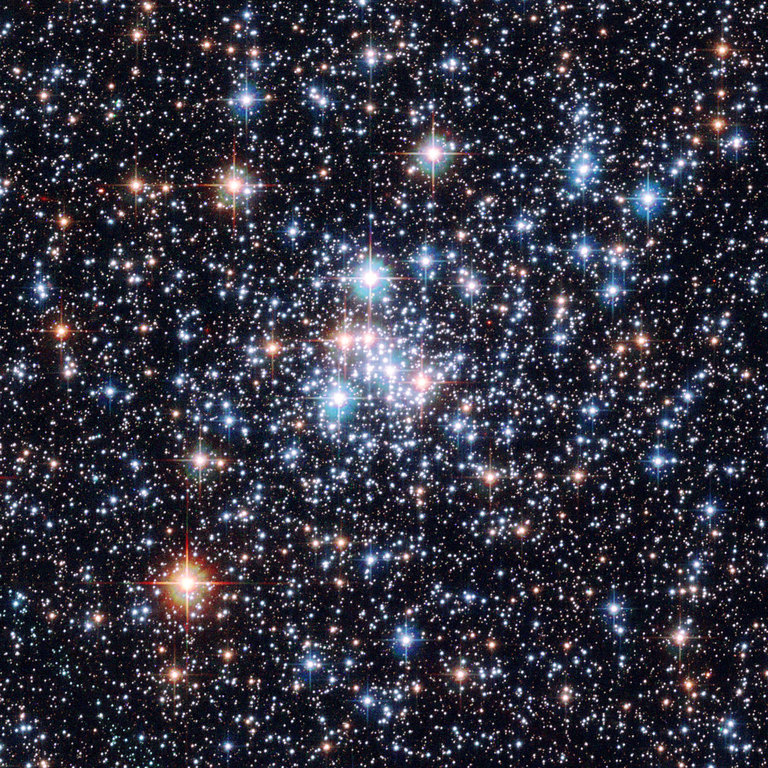
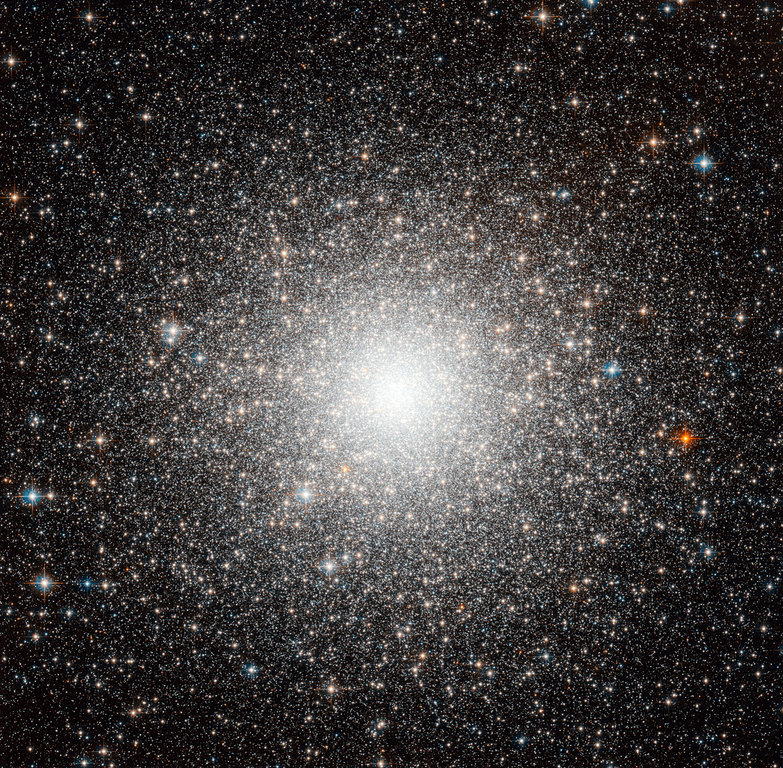
Example Clusters

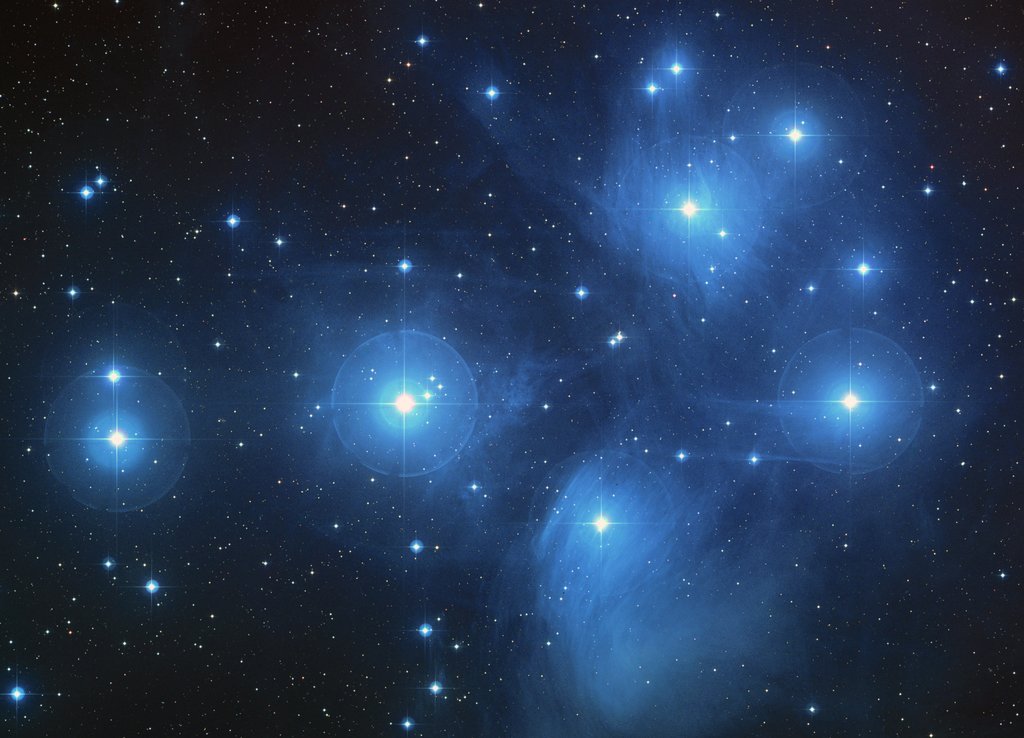
An open star cluster
A globular star cluster

Star Cluster Basics

  • All stars form from collapsing gaseous clouds of hydrogen
  • Generally then, many are formed around the same time and location
  • The initial group can slowly “evaporate” over time as stars move away from one another
    • If there is still enough mass, stars may remain gravitationally bound nearby
  • Why are they interesting to us?
    • All stars in a cluster around about the same distance away
    • All stars in a cluster are around the same age

Determining Stellar Evolution

  • All stars in a cluster formed around the same time, but some will have shorter lifetimes!
  • By looking at a cluster, you get a snapshot of stars at various stages of their life
  • By looking at many clusters, we can start to build up an intuition of how stars evolve throughout their lifetimes
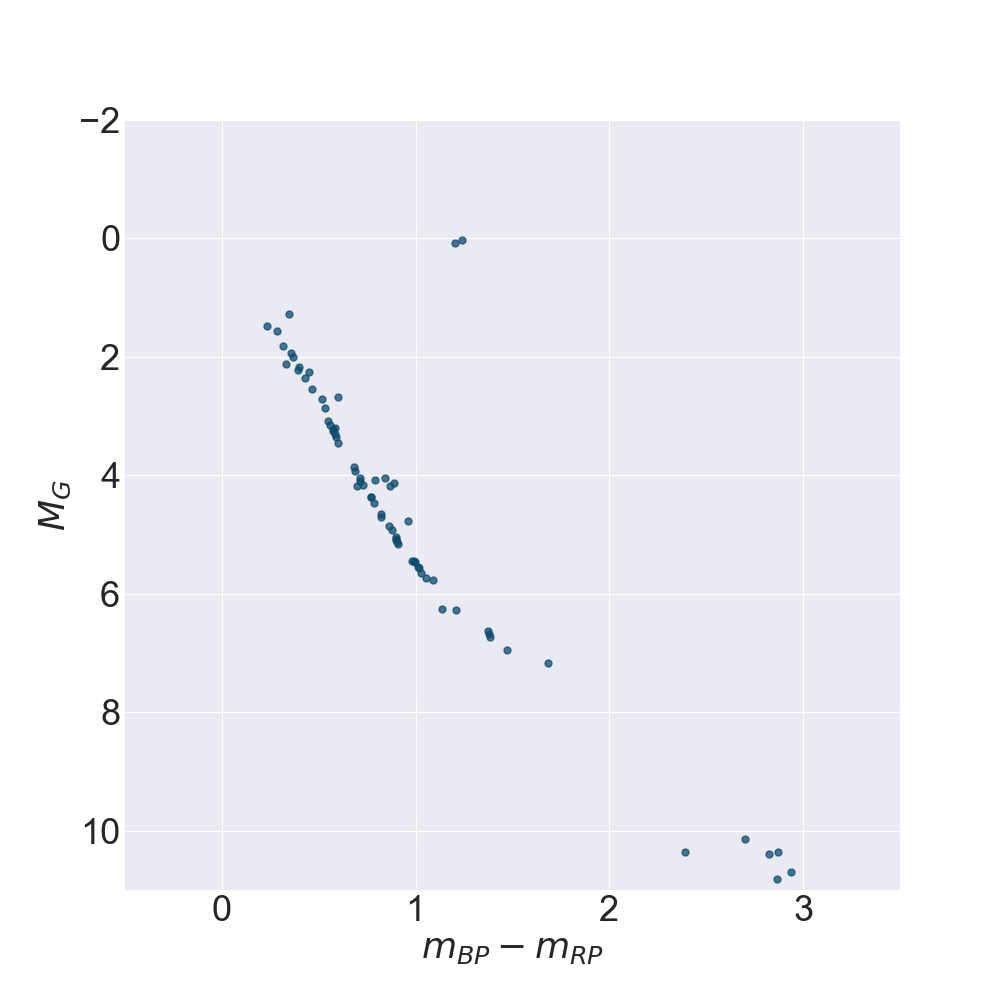
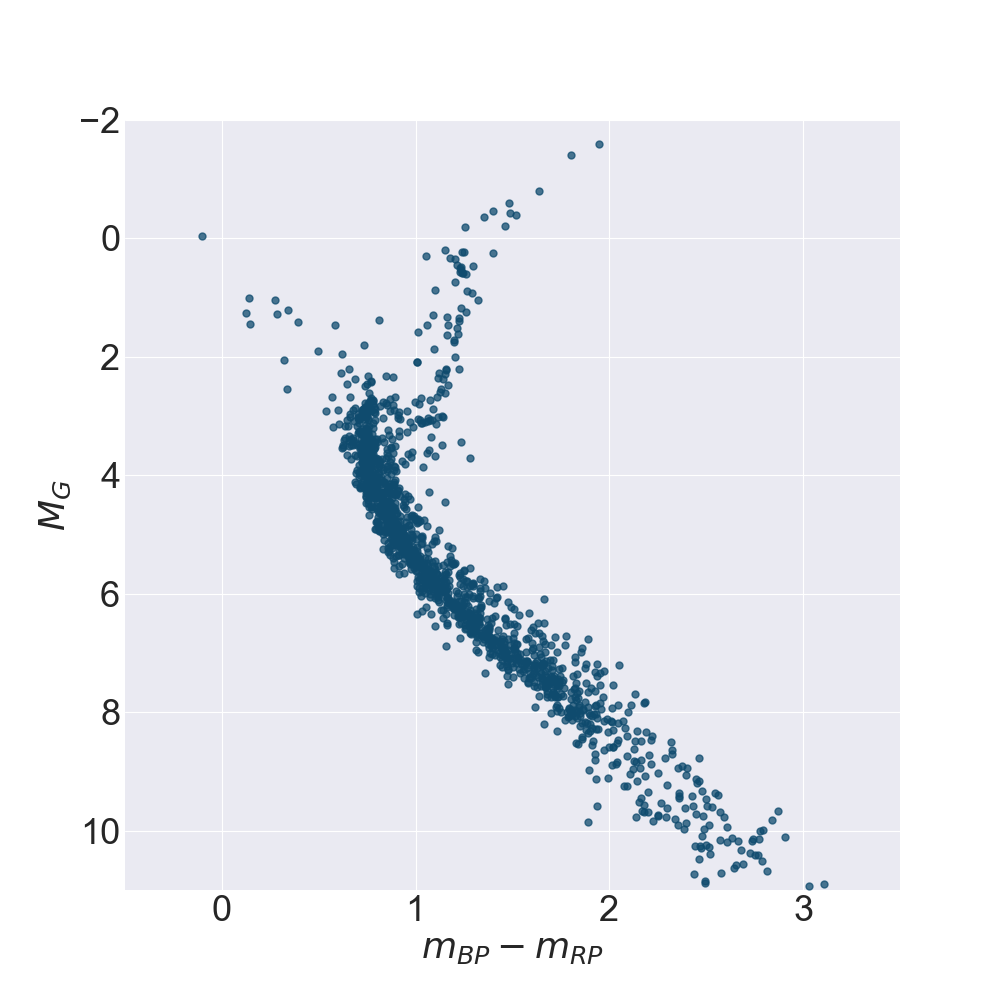
Solar Evolution

Dating Clusters

  • Once we understand the solar lifecycle, we can apply it back when looking at unknown clusters
  • The key is to look for the main sequence turn-off point
    • The further toward the upper-left that this corner or “elbow” appears, the younger the cluster
  • Can sometimes see stars appearing down in the white dwarf region for really old clusters

Types of Clusters

Open Clusters

  • Found in the galactic disk
  • Generally up to several thousand stars
  • Stars tend to be younger, more newly formed
  • Most famous the Pleiades structure
    • Visible with your naked eye in even moderately dark skies
    • A quick scan of the sky will show it easily in your peripheral vision
Globular Clusters

  • Generally found in the galactic halo
    • Above or below the disk of the galaxy
  • Much older stars
  • A very concentrated density of stars
  • My favorite is M13, in the constellation Hercules
// reveal.js plugins // Added plugins ,