The Milky Way

Jed Rembold

March 09, 2026

Announcements

  • HW7 due tonight!
    • End of a unit, so debriefing poll is open until the end of the week (Friday at midnight)
  • HW8 is live
    • Partner meet-n-green at the end of class today
  • HW3 feedback went out
    • Sorry this one took so long. I think HW4 will go much faster.

Recap

  • Rolling averages and medians
    • Don’t forget to order your data by the x-axis variable!
    • Need to choose a window big enough to help with the noise, but small enough to not lose important features
    • Need to decide how to handle the edges
  • How to use BLS_search
  • The depth can be computed directly from the \(s\) and \(r\) values from the peak period: \[ \frac{|s|}{r} + \frac{|s|}{N-r} \]

Discussing Today

  • Determining the structure of the Milky Way
    • How to visualize something when you are inside it?
  • Distances beyond parallax
    • There is a limit to how precisely we can measure angles. So how do we go further?
  • Galaxy Formation
  • Galaxy Types

The Milky Way

For the Lactose Tolerant

  • To the Greeks appeared as a ribbon of milk across the sky

    • Likely the source of its name
    • Greek word for milk: galactose
  • Galileo was the first to turn a telescope upon it:

    The galaxy is, in fact, nothing but a collection of innumerable stars grouped together in clusters. Upon whatever part of it the telescope is directed, a vast crowd of stars is immediately presented to view. Many of them are rather large and quite bright, while the number of smaller ones is quite beyond calculation.

    Galileo Galilei, The Starry Messanger (1610)

Shaping a Picture

  • Determining the size and shape of an object an observer is within can be tricky
  • How could you try to estimate the size and shape of Collins, without leaving this room?
    • We can’t see through walls, so visible obstructions are a serious problem
    • Exterior windows aren’t really giving us a view of the building
      • Probably on the edge then?
    • Looking through the interior window:
      • A portion of hallway and another classroom

Inspecting the Milky Way

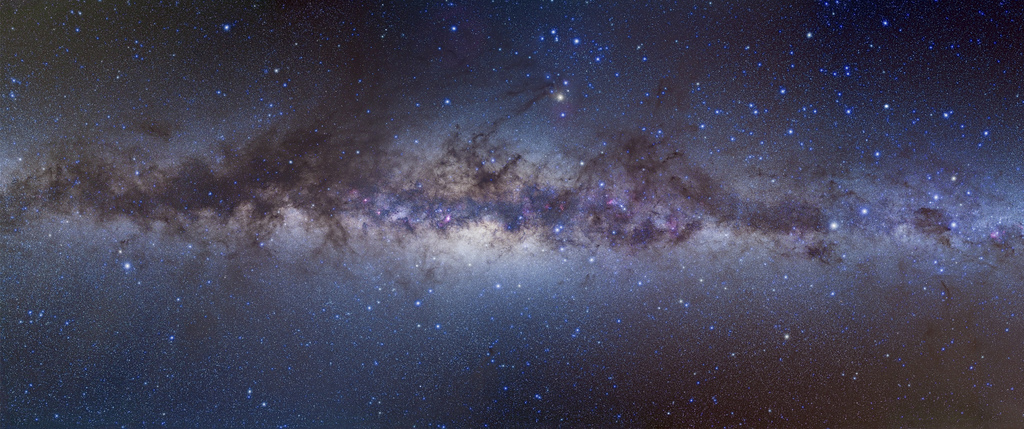
The Story of a Band

  • If the Milky Way appears as a band across the sky, what does that tell us?
    • We see way more stars looking in a specific direction than most others
    • At 90 degrees to this direction, we see comparatively little
    • At 180 degrees to this direction, we see more than at 90, but not nearly as much as the main direction
  • Conclusions?
    • The galaxy must be fairly flat
    • We aren’t on the very edge, but probably not in the middle either

Measuring the Galaxy

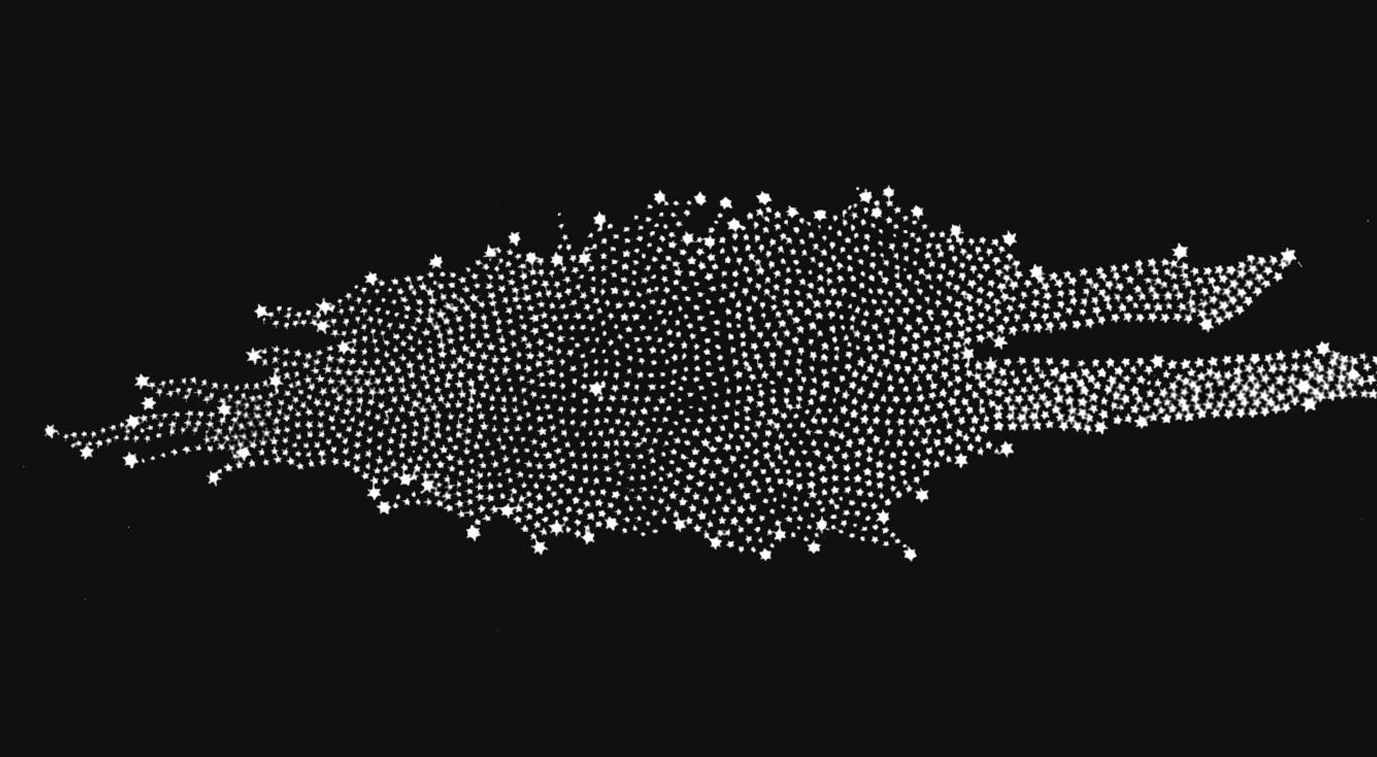
  • In the early 1800’s, William and Caroline Herschel tried counting stars in different directions
  • They concluded:
    • The Milky Way was 5 times as wide as it was thick
    • The Sun was approximately at the center
    • There were several branches
The Herschel’s Map of the Milky Way

What went wrong?

  • Herschel had no way of knowing about how huge stellar distances were
    • The first parallax measurements were gotten 15 years after his death
  • Didn’t realize it would be impossible to “see” to the edge of the galaxy
    • Most stars would have been far too faint to see with his telescope
    • Plus, much of the galaxy is obscured by opaque (to visible light) dust!
Variations on the Theme

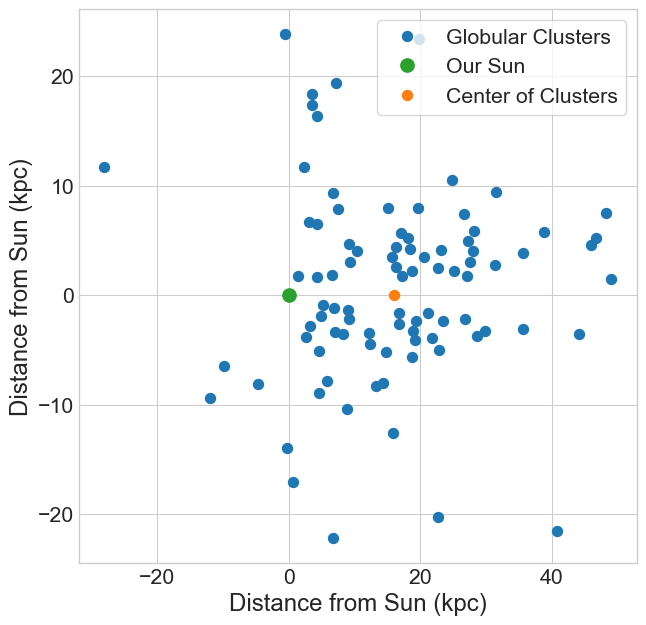
  • Harlow Shapley attempted to do similarly, but instead used globular clusters
    • Globular clusters live mostly above or below the dust band
    • Contain many stars, and thus are easier to see and measure from a greater distance
  • Findings:
    • An approximately spherical distribution
    • Definitely not centered on the Sun

Moving up the distance ladder

Galactic Distances

  • Most methods of determining shape rely heavily on accurate distance measurements
  • But we can only measure parallax distances for the very nearest stars!
Moving up the Distance Ladder

  • As we venture further, we need new ways to determine the distances to objects
  • Some include:
    • Main sequence fitting: comparing cluster HR diagrams to theoretical diagrams
    • Variable Stars:
      • RR Lyrae
      • Cepheid Variables

Cepheids

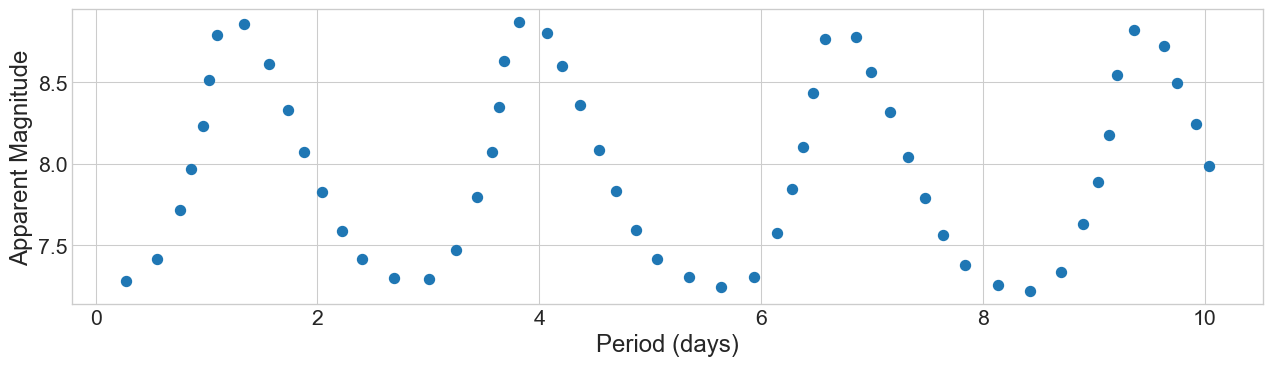
  • Giant stars with very predictable pulsations in brightness
  • Located along the instability strip in an HR diagram
image/svg+xml Spectral Class O B A F G K M L T +20 +15 +10 +5 0 -5 -10 Hypergiants -15 Subdwarfs White Dwarfs Brown Dwarfs Main Sequence Dwarfs Subgiants Giants Bright Giants Supergiants AbsoluteMagnitude The Instability Strip classiccepheids W Virginisvariables RR Lyraevariables

Time = Power!

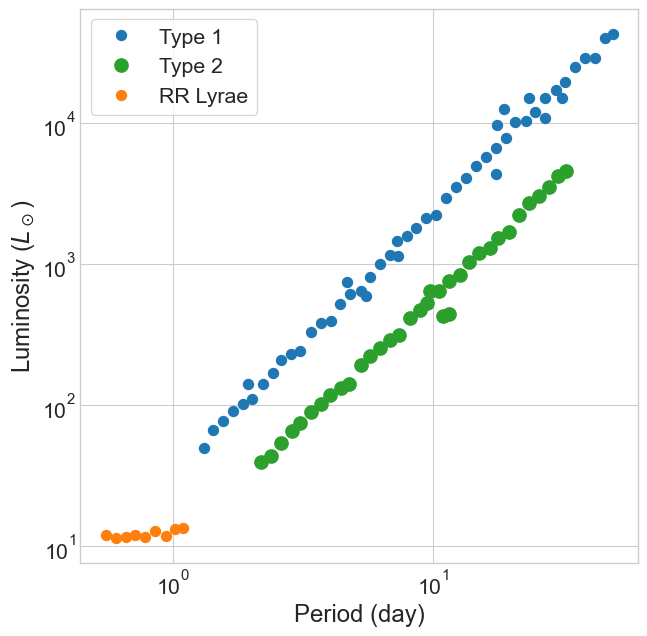
  • In 1912 Henrietta Leavitt noticed a peculiar trend for Cepheid variables in the Small Magellanic Cloud:
    • Those with higher luminosities
    • Also had longer pulsation periods
  • This gives an easy way to determine luminosities!
  • Which then gives us distances!

Putting it Together
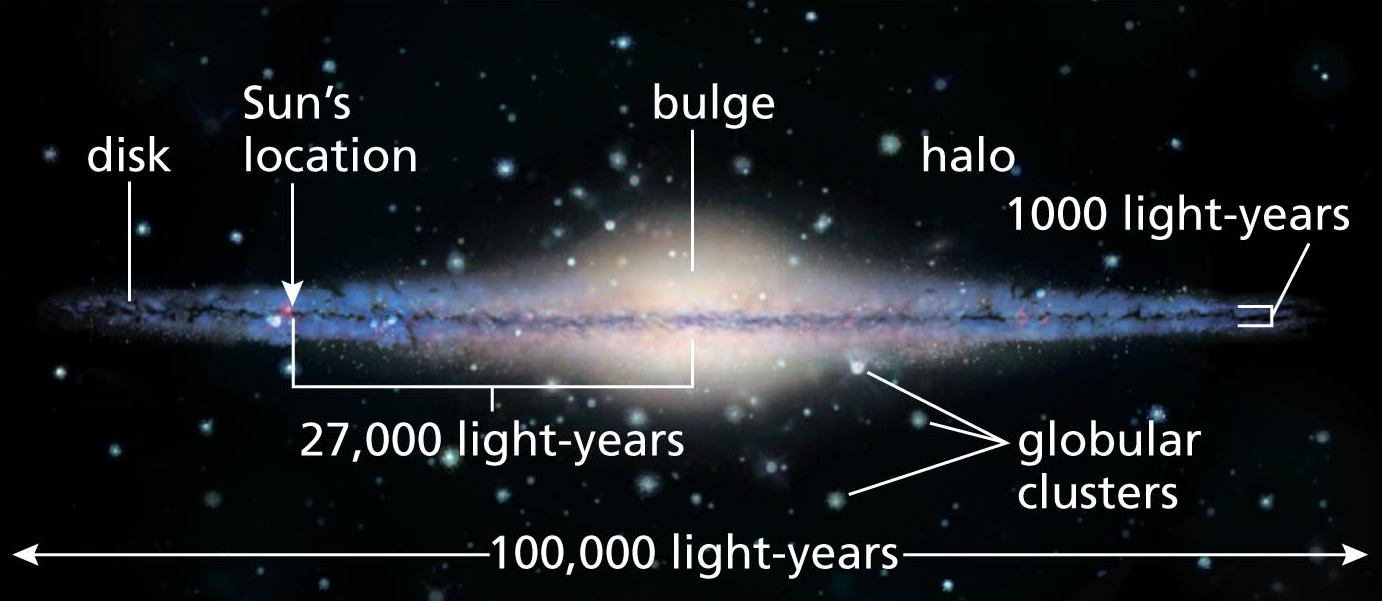
A illustrated side-view of the Milky Way

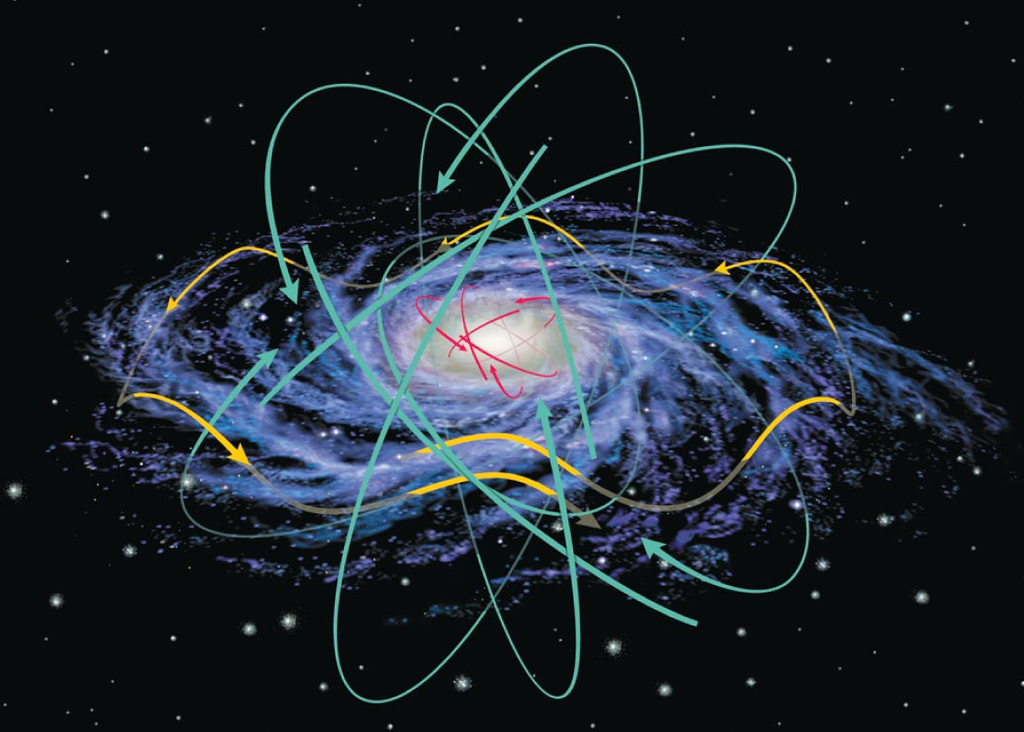
Orbital Paths

The star orbital paths about the Milky Way

How to Build a Galaxy

Heavy Metal

  • Stars in the MW halo are old!
    • A smaller fraction of heavy elements than the Sun
    • Largely low-mass, red stars
  • Stars in the disk are relatively young
    • A greater or equal fraction of heavy elements to the Sun
    • Lots of high and low mass stars, both blue and red
  • Stars in the halo must have formed early in the Milky Way’s history
    • When fewer heavy elements existed
    • There is little to no ISM (gas) still in the halo to form stars from

Galaxy Formation

  • Any theory of galactic formation needs to predict these differences between halo and disk stars
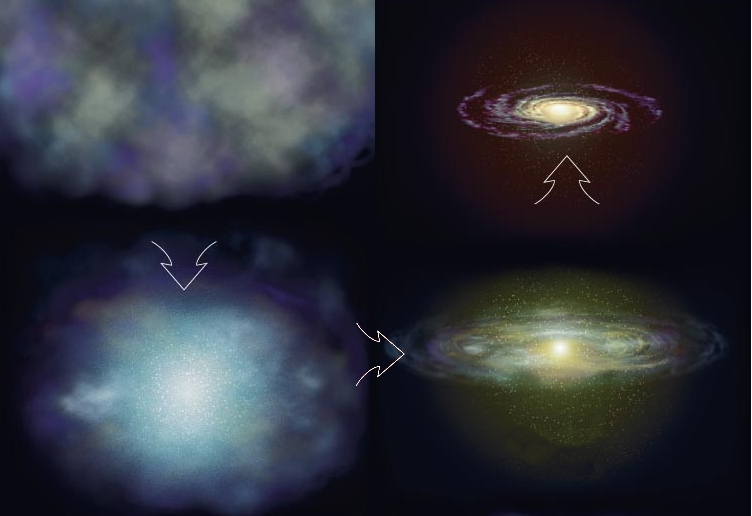
  • Current theory is that of a giant protogalactic cloud that collapses under gravity
    • Halo stars form as it collapses
    • Then get left behind as angular momentum flattens the collapsing cloud
Problems with Protogalactic Clouds

  • Stars and star clusters would be forming the entire way throughout the cloud’s collapse
  • So halo stars far from the center would be older (on average) than halo stars nearer the center
    • Would imply that far away halo stars should have less heavy elements
  • But in truth, all halo stars have about the same elemental composition
  • May suggest a collision between multiple protogalactic clouds?

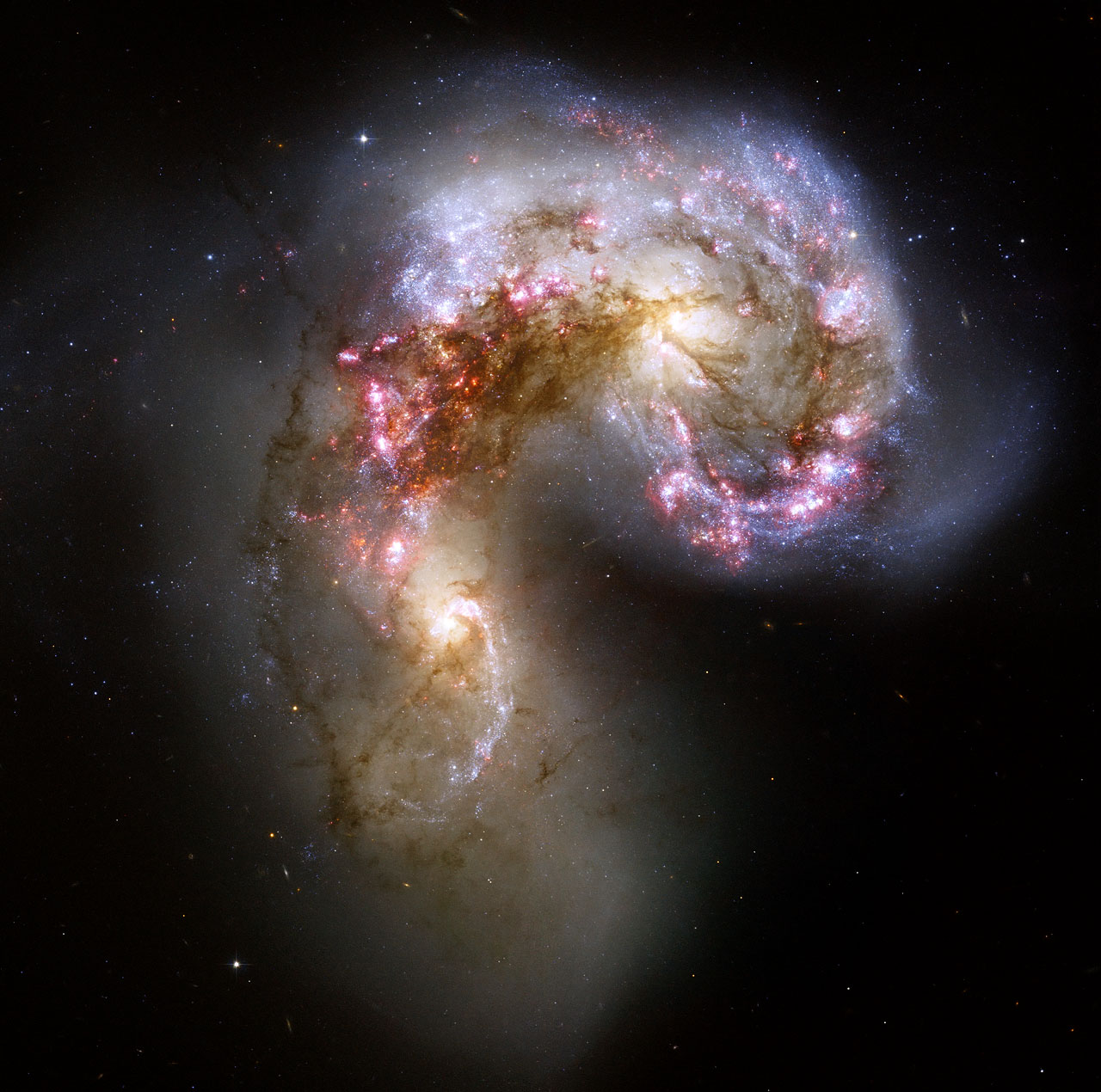
Galaxy Collisions

  • Galaxies tend to cluster in groups, so collisions are a very real possibility
  • Evidence that the Milky Way has already consumed two galaxies in the past
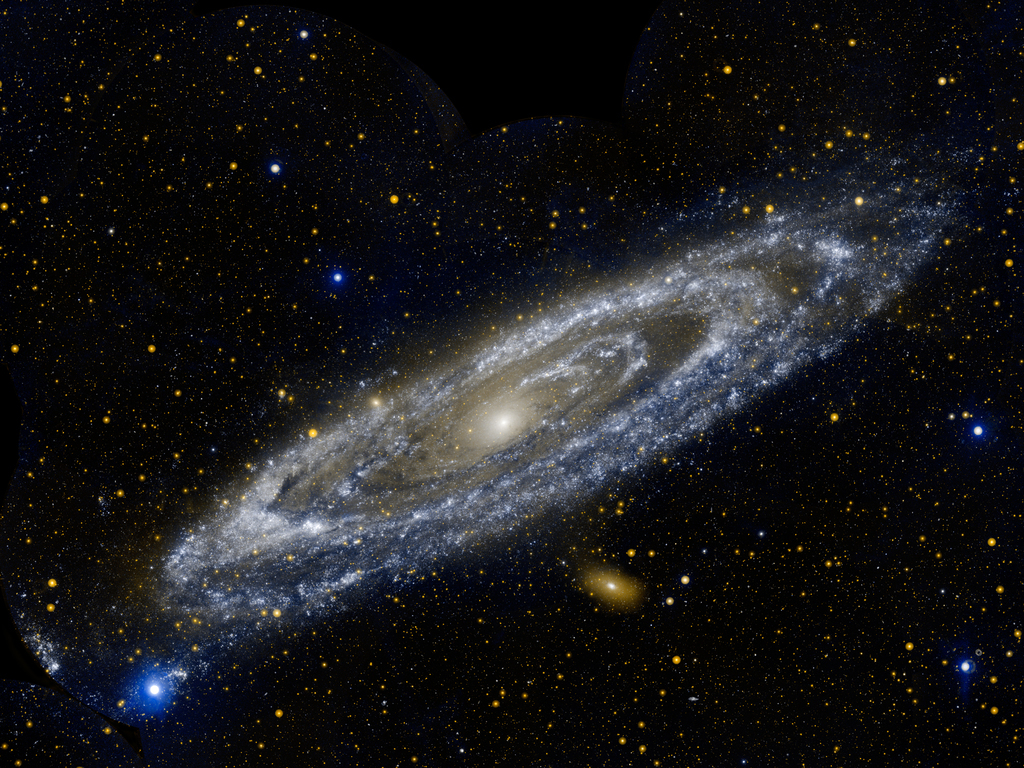
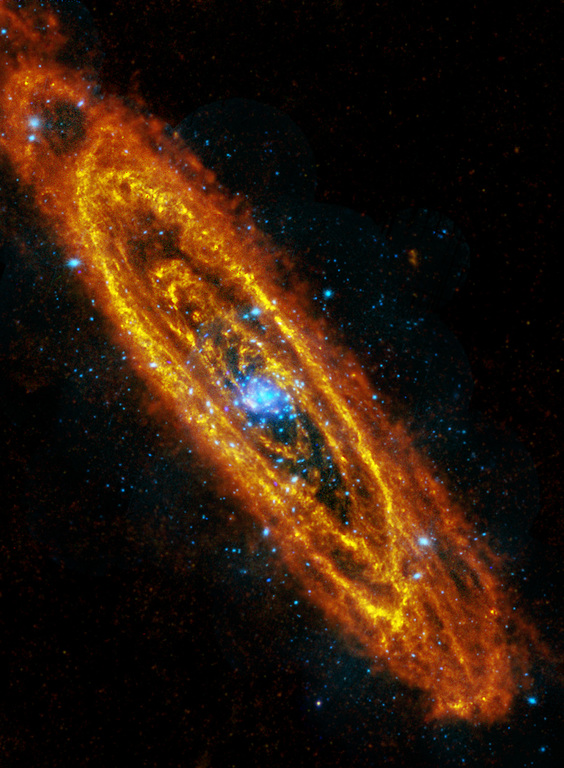
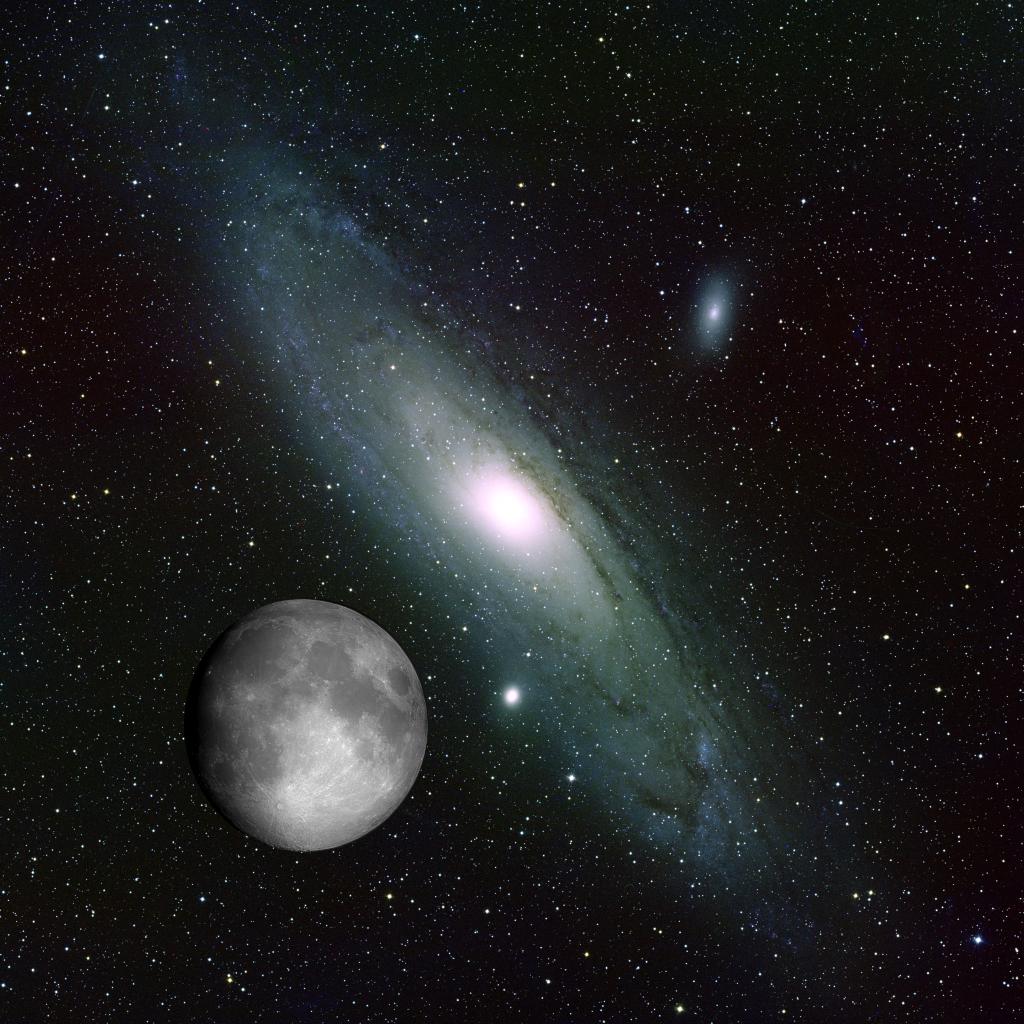
  • The MW will collide with the Andromeda galaxy in about 5 billion years

Nearby Galaxies

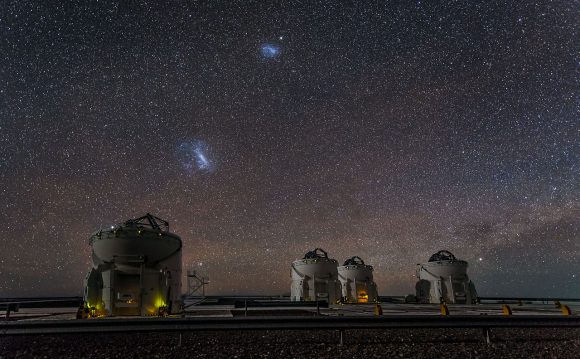
Our neighbors: The Magellanic Clouds

The Magellanic Clouds
  • Large and Small (about 160,000 and 200,000 lyrs away)
  • Irregular dwarf galaxies, though they do have some spiral structure
  • Both orbit the Milky Way (or do they?!)
  • Only visible in the Southern hemisphere

Our neighbors: Andromeda Galaxy
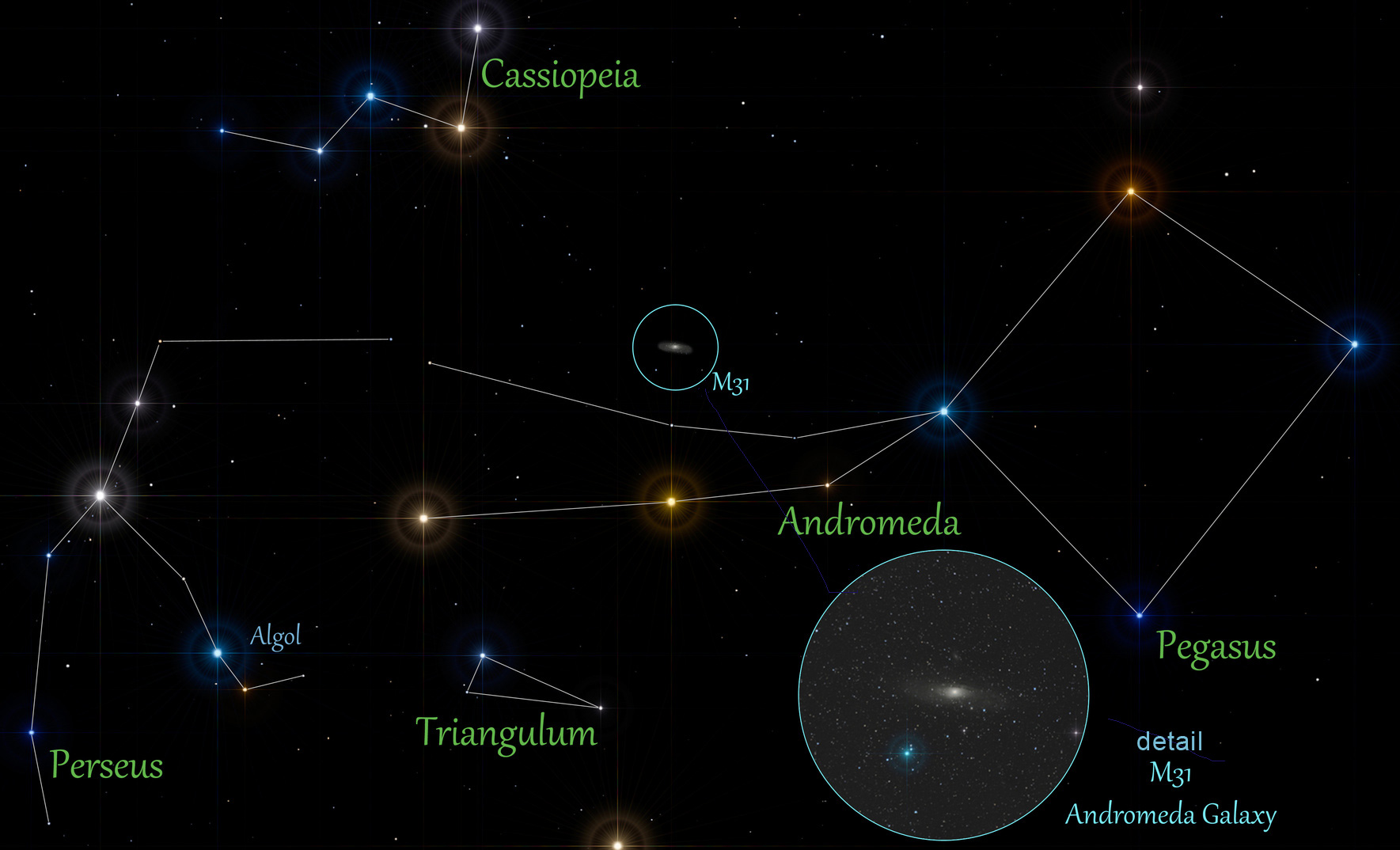
Andromeda Galaxy Location

Our neighbors: Andromeda Galaxy

Andromeda central disk

Our neighbors: Andromeda Galaxy

Andromeda in IR
If we could see the fainter stars

Types of Galaxies

Galactic Flavors

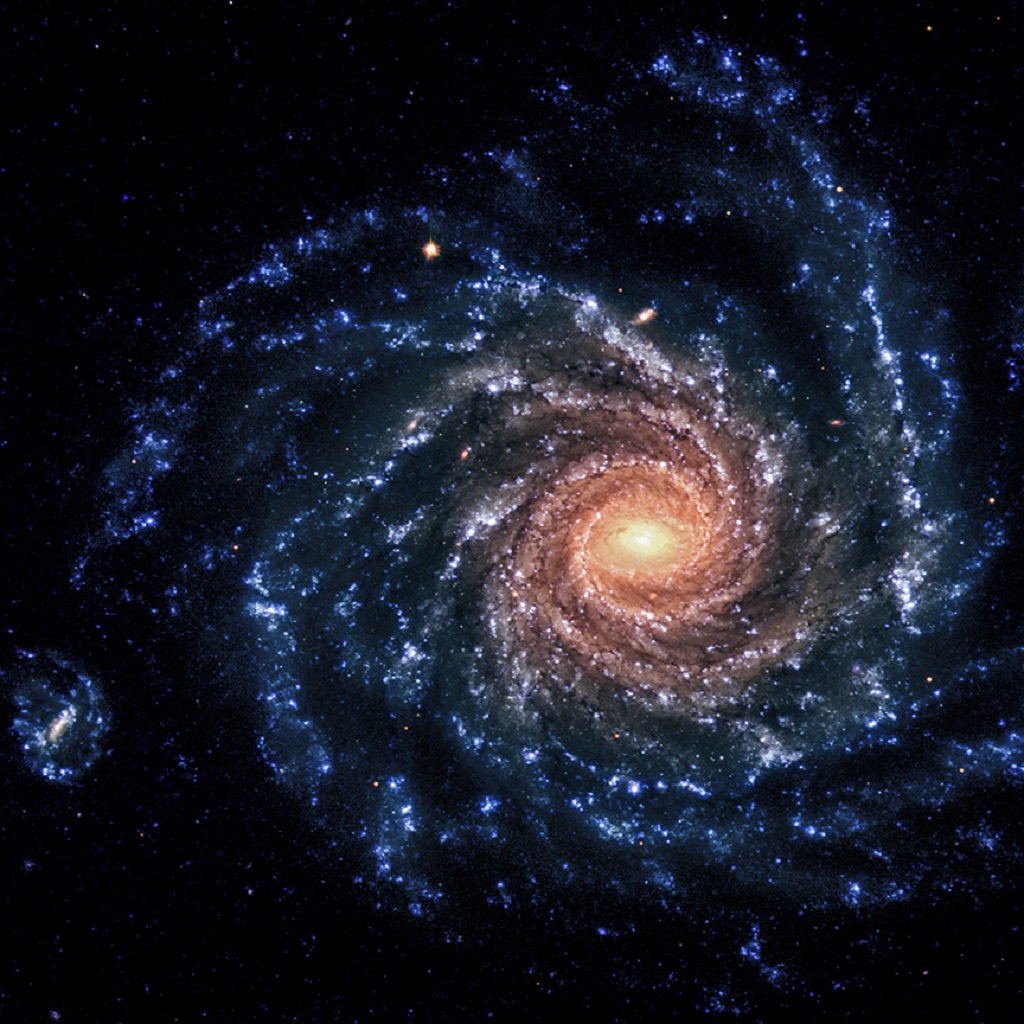
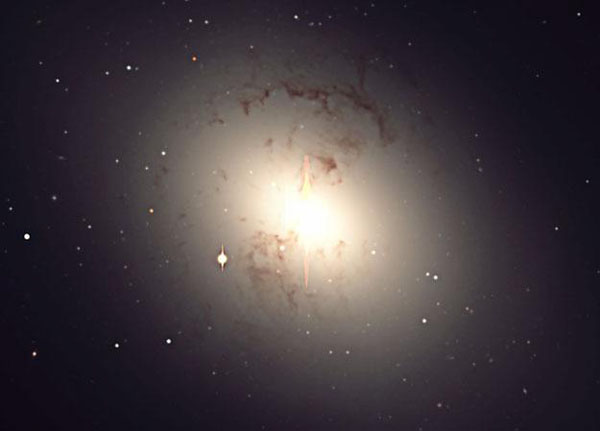
  • Looking beyond our neighbors, all galaxies tend to come in one of three main types:
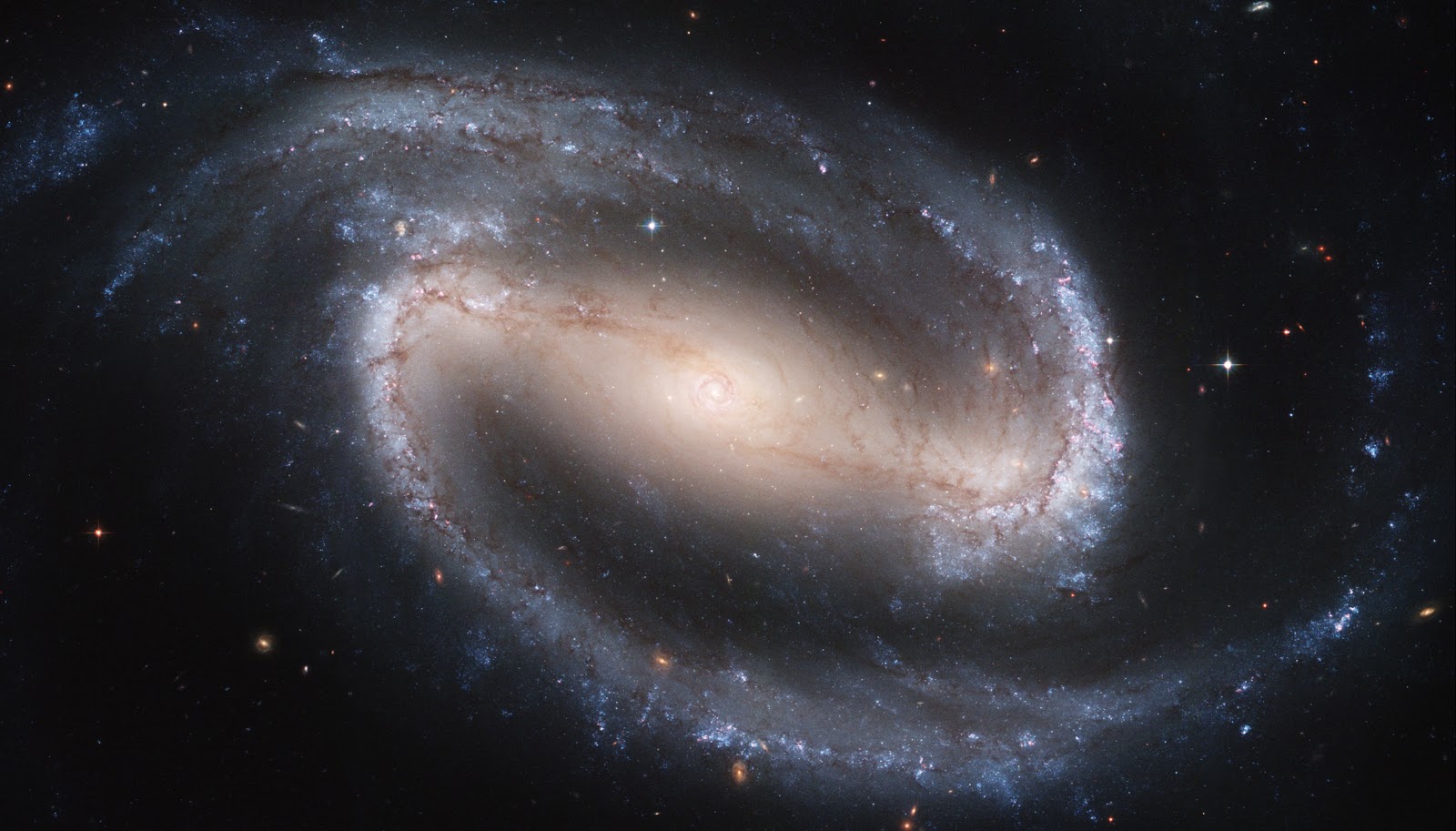
    • Spiral
    • Elliptical
    • Irregular

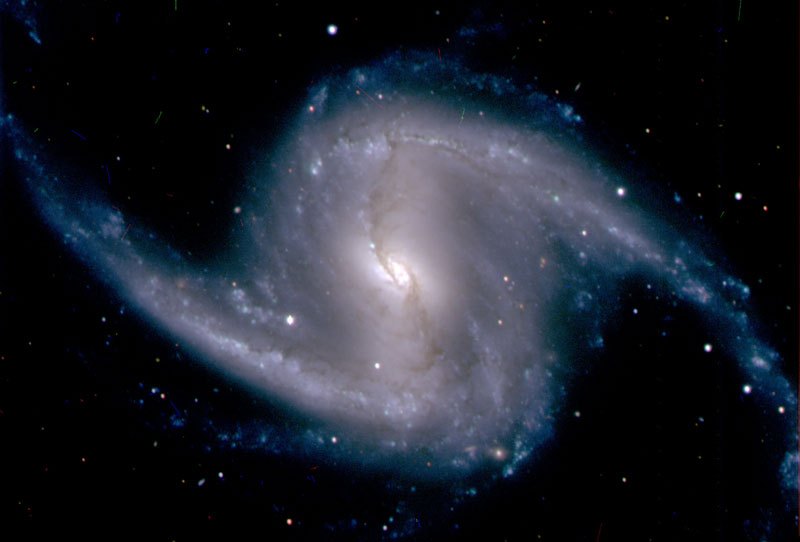
Spiral Galaxies

  • Many of the same characteristics of the Milky Way
    • Spiral disk, bulge, halo, etc.
  • Can come in normal or “barred” varieties
  • Spiral arms can be wrapped to varying degrees
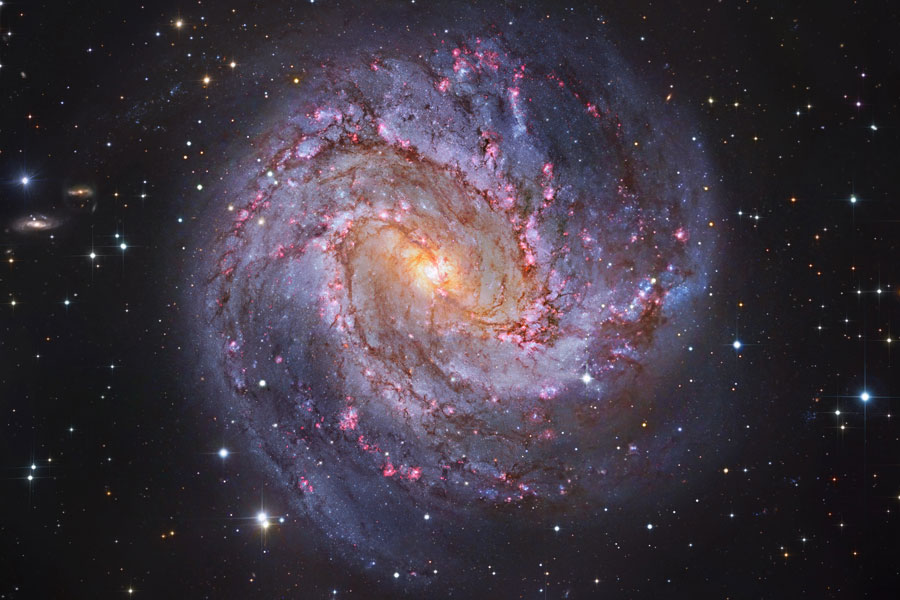
Spiral Arms
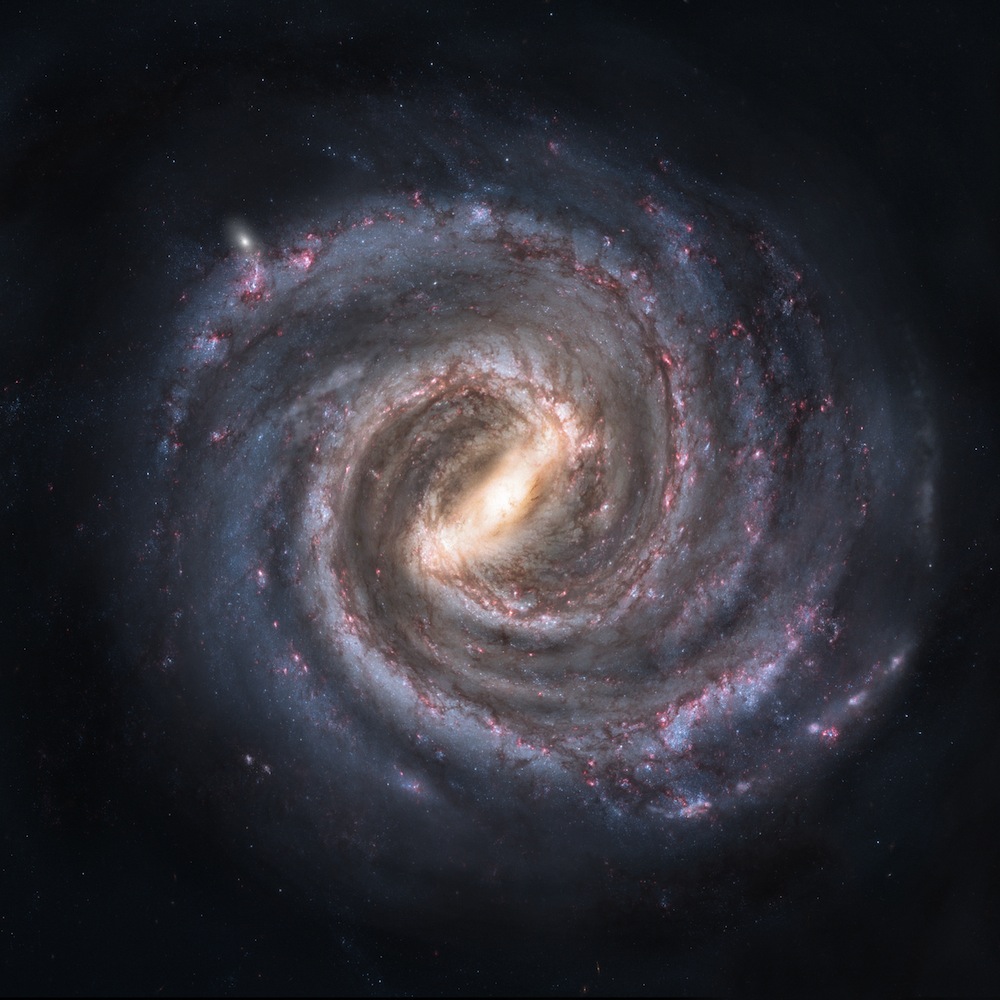
  • Blue regions indicate star forming regions
  • Galaxy rotates at same speed, so inner regions have shorter periods
  • If arms moved with the stars, they would get all wound up!
  • Spiral density waves:
    • Pinches everything together in that region
    • Doesn’t effect normal stars much
    • Help molecular clouds collapse to start star formation

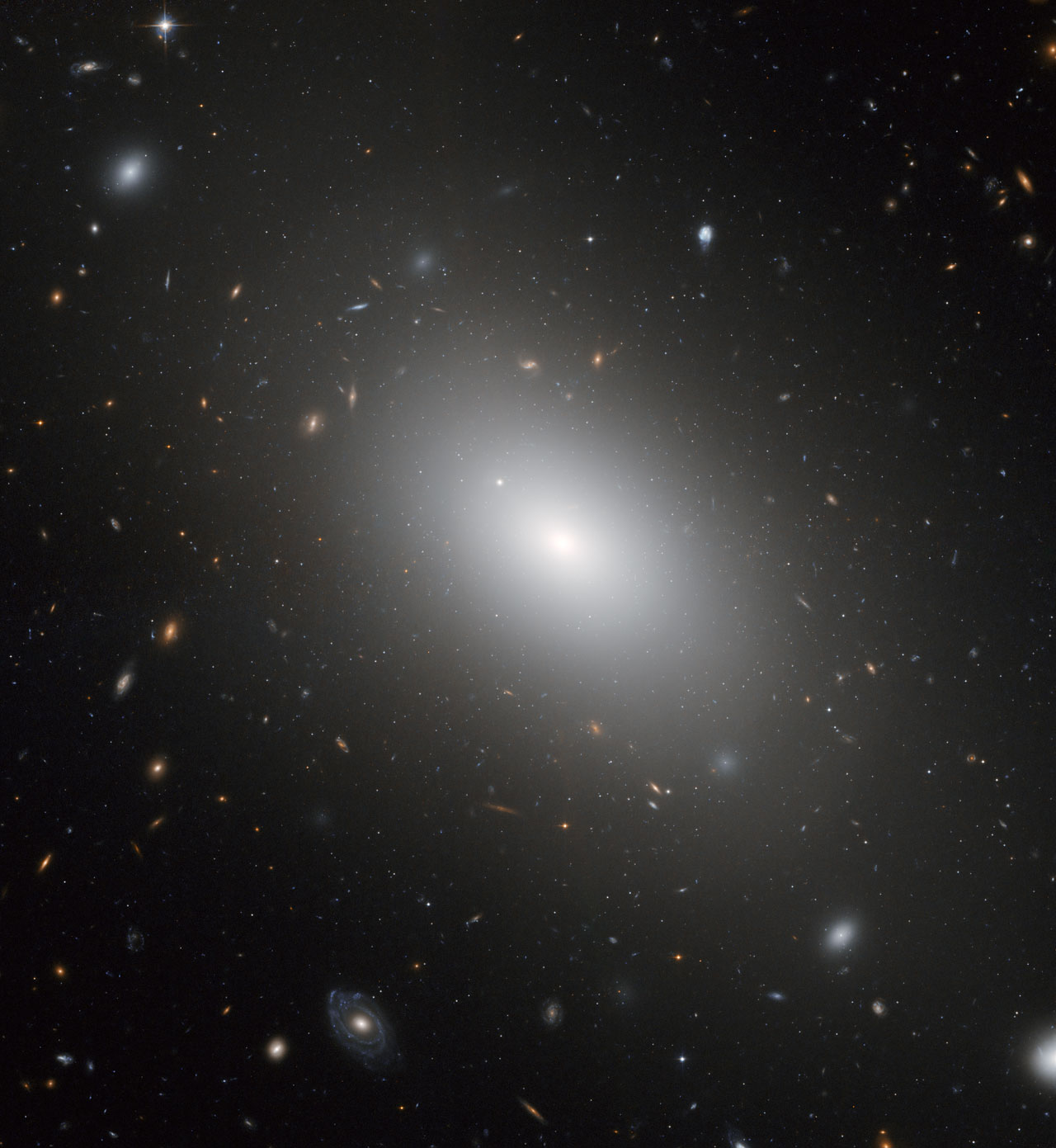
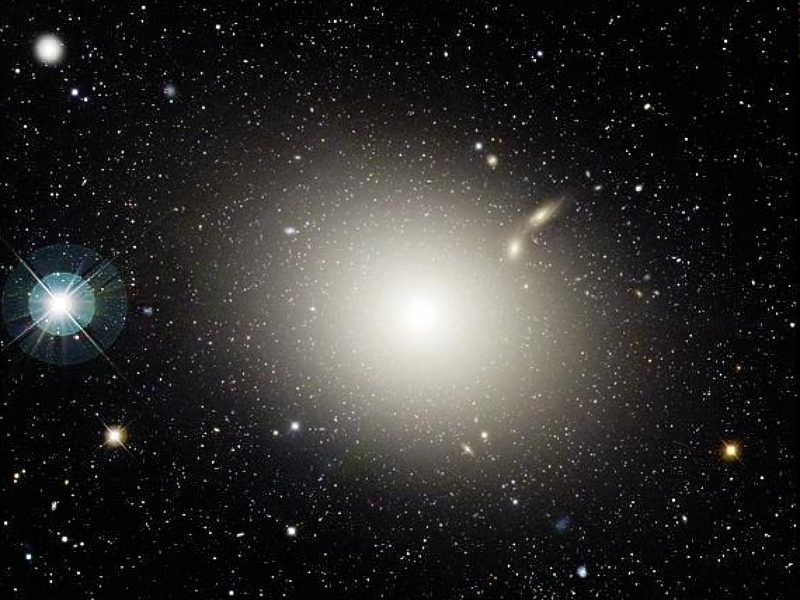
Elliptical Galaxies

  • Differ from spirals in important ways:
    • Have no disk
    • Rotate more slowly
    • Contain very little gas or dust
    • Contain mainly old stars
    • Huge range of sizes:
      • 0.0001-100 times the MW size

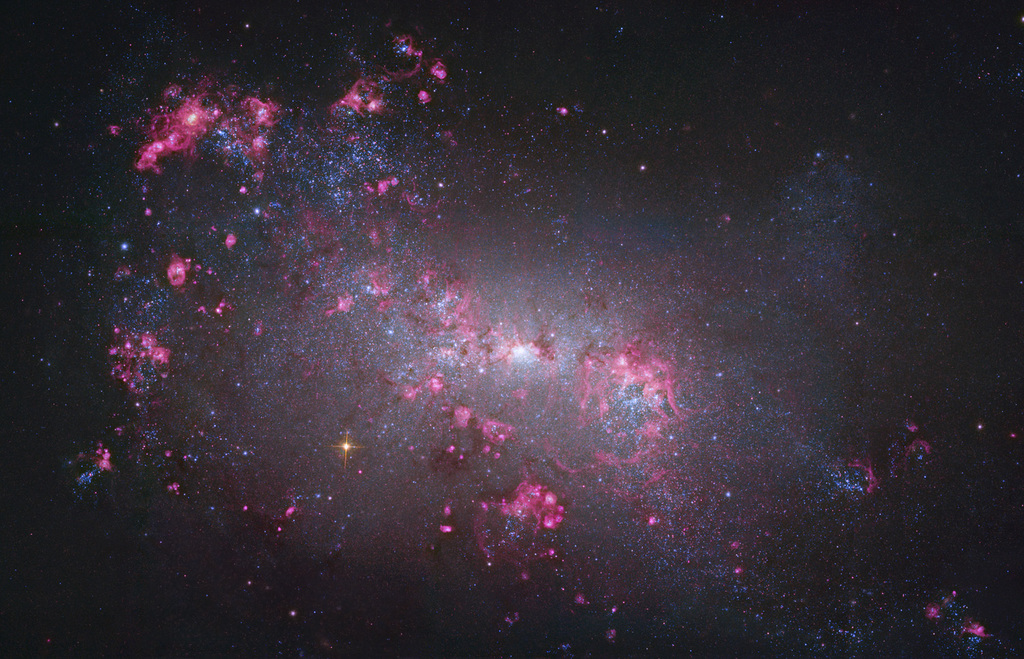
Irregular Galaxies
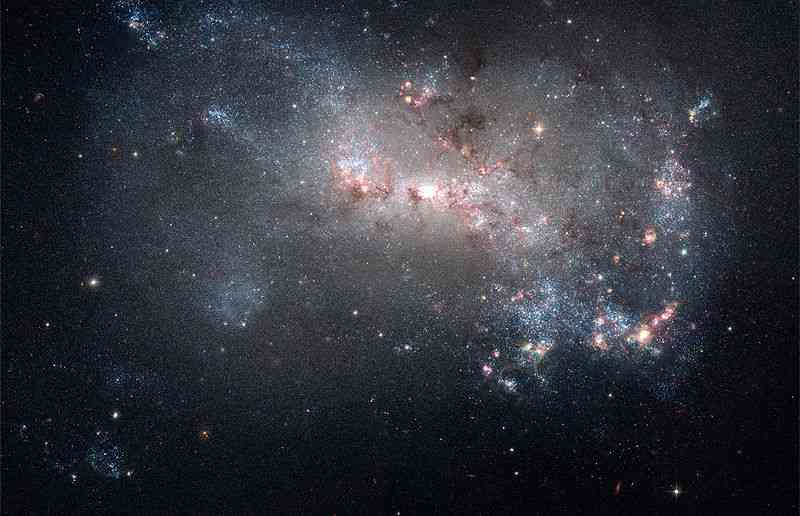
  • The misfits that don’t match one of the other categories
  • Often times harbor very active star forming regions
  • Sometimes the result of galaxy collisions

Hubble Fork
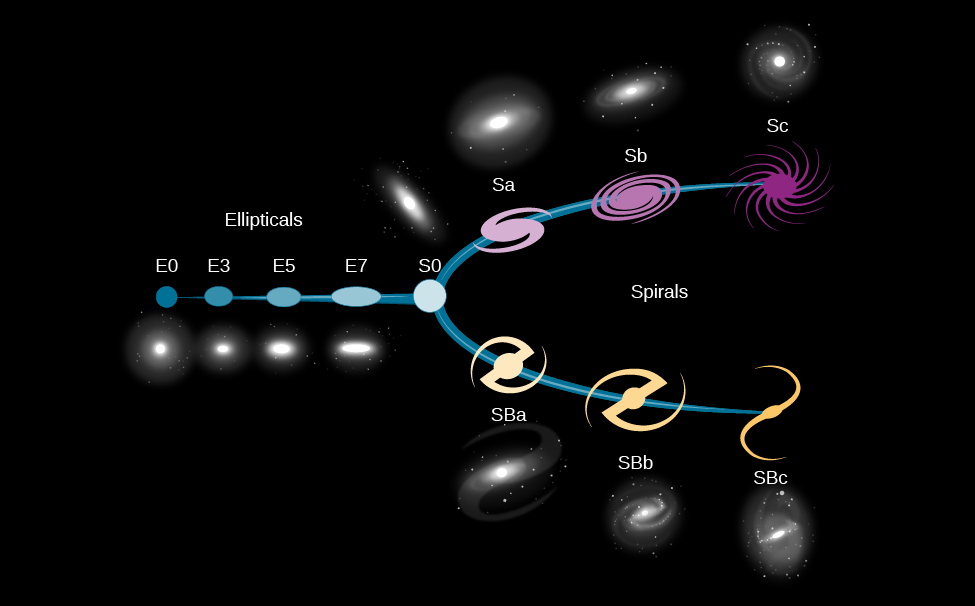
Hubble’s Classification Fork

HW8-9 Partners!

  • You have the rest of class to meet up with your new partner for HW4 and start to plan ahead
  • Aby and Normandy
  • Mac and Yumi
  • Liam and Morgyn
  • Cordelia and Ben
  • Cody and Maiti
  • Laken and Saul
  • Lev and Rebecca
  • Jack and Florian
  • Kaylee, Deana, and KJ
// reveal.js plugins // Added plugins ,