|
Poli 212 Western Political Philosophy
Professor Sammy Basu |
Historiography and Mill |
|
|
|
||
|
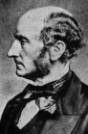
JOHN STUART MILL (1806-1873) |
||||||
|
|
Author
|
Text
|
Context
|
Whig
|
Mill emerges from
oppressive childhood with an abiding respect for rational utilitarianism
tempered by appreciation for creative individuality. |
On Liberty is
another of the great liberal texts, in affirming individual independence and
strenuously arguing for not only limited government but restraints on public
social power to cajole and cow individuals into a stultifying and safe
mediocrity. |
Victorian era witnesses considerable
liberal progress in beliefs and practices towards government. Franchise is extended (doubled, doubled,
tripled, respectively) as a result of three admittedly hard-fought Reform Acts,
of 1832 (1 man in 5), 1867, and 1884, extending vote to middle class and then
agricultural workers. Market frees
the creative energies of producers and consumers. |
Marxist
|
Author
Mill is product
of upper-middle class education emphasizing rationality and industriousness
and absorbs romantic myths of heroic individuals. |
Text
Upper middle class
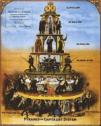
Mill continues the ideological work of liberal theorists by defending a
conception of individuality that minimizes social interdependence and instead
equates individual liberty with free trade.
Emphasis on limited government serves to open social and economic
spheres to the economic interests of rich capitalists and large firms. |
Context
Urbanization and
industrialization complete the transfer of European society from agrarian to
capitalist structures. Robinson
Crusoe is a model bourgeois Puritan.
Imperial Britain is able to
withdraw from the most coercive forms of global imperialism namely slavery
and colonialism because global capitalism and the spread of the international
free market is now well advanced. |

Feminist
|
Author
Authoritarian
father followed by a long companionate adult relationship with early feminist
which sensitizes Mill to injustices and hypocrisies towards women (and
implicitly men) within liberal practices.
Mill champions cause of suffrage in Parliament in the face of public
ridicule. |
Text
While there are
hints of Mill’s realization that liberalism had unfinished business, this is
centrally and forthrightly argued in the Subjection of Women. Though many of these arguments were
already in print, Mill was the first prominent male author to articulate them
effectively. Mill makes several core
feminist arguments: gender is a politically salient category, gender is
socially constructed, both women and men are affected by it, gender
construction and discrimination are unfair and inefficient. |
Context
Urbanization/industrialization
transform home into sphere for private emotional life and affect role of
women accordingly. Ironically, though
monarch, Queen Victoria represented a kind of femininity centered on the
family, motherhood and respectability, which women were expected to mirror in
their own domestic domains. Distinction between public man/private
women hardens with the result that extension of suffrage to women is a long
time coming: the Act of 1918, enfranchised all men over 21 but only women
over thirty; equalized by age only in 1928 by the Equal Franchise Act. Alongside emphasis on respectable women
was a salacious preoccupation with fallen women. |
Post-Modern
|
Author
Upbringing reflected
the harsh culmination of the logic of the secular construction of the Lockean
liberal self. Mill is saved to some
extent by romanticism which usefully frees him from himself. |
Text
Mill diagnoses
the Calvinist residues in modern liberal self with great perceptiveness. Even as overt political tyranny has been
banished the engines of moral repression continue unabated threatening
individuality, idiosyncrasy and ultimately openness to real progress. Mill does well to affirm eccentricity,
originality, impulses and sheer energy, and so on but there is still
something conservative and elitist in his affirmation of higher pleasures
generally and freedom enabling the special characters specifically. |
Context
In the wake of
collapse of legitimacy of old institutions that maintained order, new
institutions are needed to maintain social control, e.g. public education,
manipulation of manners, mores and standards of public respectability
emerge. Calvinism is sublimated in
models of secular decency and in activist societies for the reformation of
manners and for attention to public ‘health issues’. |
Useful sites: