H131 |
|
Spring 2017 |
R. Loftus, Walton 144 |
||
x6275 |
Class Times: M, W 2:30-4020 pm Loc: Walton Hall Basement 21 |
Main office Hours: MF, 10:00-11:00 am; TTh 9:30-10:30 am |
a) how human consciousness, action and agency are embedded in such key historical moments as the decision to use atomic weapons against Japan, popular opposition to the US-Japan Security Treaty (Ampo) in 1960, and the rise of a feminist consciousness in the 1970s;
b) how change and continuity, past and present, interact in historical experience as evidenced by select policies during the Allied Occupation of Japan;
c) how the study of the past helps us make sense of the present as captured in a variety of films that raise important issues for postwar Japanese viewers
d) how the position of women changed in postwar Japan and how the "Women's Liberation Movement" of 1970 affected women's lives as captured in memoirs and documtary films; and
e) how Japan’s sense of its own responsibility for the war, for wartime atrocities, for the creation of comfort women stations and the imposition of sexual slavery, and how recent events impacting environment and sustainability issues in Japan have shaped the discourse on nuclear power and energy use in Japan.
--How did the presence of militarism and war in the 1930s affect the ability of individuals to act and have agency?
--How did questions about the prewar Emperor System and War Responsibility shape postwar Japanese political discourse?
--How did economic recovery and the reconstruction affect the Japanese outlook on the world?
--What is the meaning of the "postwar economic miracle," and the remarkable period of "high-speed economic growth" in the 1960s and 1970s?
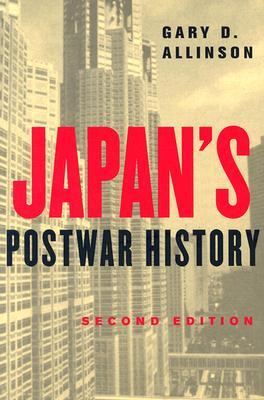
For General Background:Gary Allinson, Japan's Postwar History, 2nd edition |
![]() |
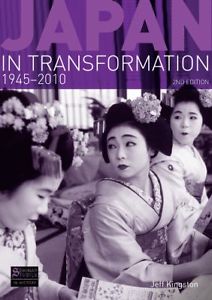
Jeffrey Kingston, Japan in Transformation 1952-2010, 2nd edition (2011)(contains useful Documents in Part 4) |
|
Ronald Loftus, Changing Lives: The 'Postwar' in Japanese Women's Autobiographies and Memoirs (AAS, 2013) |
![]() |
See the Japan sections of the Internet East Asian History Sourcebook This site contains some excellent links!
See also the Library of Congress, Asian Reading Room which has some relevant sections.
There is a very good site on Photography and Social Research in the Occupation posted by an occupation participant. See also the Pennino collection.
See an excellent collection of Japan Links (find History under Miscellaneous); and useful electronic sources on the Japanese Economy
There are a number of excellent documentaries as well as some great Japanese feature films from this era that we will view in order in order to acquire a sense of both popular culture and issues that were important to filmmakers and the public in the postwar years. The films are points of departure for us to respond as historians might, thinking about the implications of the films we watch.
Regarding the medium-length and final paper, I am envisioning here not a formal "research" paper, but rather a discussion paper on a topic of your choice likely drawn from Alllinson, Kingston or Loftus in one of their chapters, or any of the assigned articles and PDFs; but for this paper you may wish to find some additional sources that shed light on your topic. In other words, use the materials we have talked about together but also build and develop your discussion beyond just the class readings. Which probably means visiting the library.
The final paper wil be a slightly longer paper (7-10 pp), dealing with issues like war memories and reconcnciliation, women's liberation and feminism in the 1970s, specifically, the stories of women found in Changing Lives, the comfort women issue, the Asian Women's Fund, the Kono Statement, PM Abe's equivocating about it, the postwar economic miracle, the demographic time bomb, the bursting of the economic bubble, the issue of US bases in Okinawa, the controversy over the fate of Okinawan civilians during the Battle of Okinawa, etc.
The Documents in the Kingston book are also very relevant here. Please come talk to me about your ideas.
An in-class presentation of your final paper topic is required during the final week of classes.
Introduction to the Course
Brief Video "Reinventing Japan"
Other Surrender Documents
Introduction to Video, ABC News Report on "Hiroshima: Why the Bomb was Dropped" (67 minutes)
Background: Allinson, Intro and Ch. 1, “Antecedents” 1932-1945, 1-44
In-class: Finish viewing ABC News Report on "Hiroshima: Why the Bomb was Dropped" (67 minutes)
John Dower, "The Most Terrible Bomb in the History of the World," on WISE, Resources, "John_Dower.pdf" (student-led discussion)
Reference: Takaki, Hiroshima: Why America Dropped the Bomb, Chapter 3 (30 pp) (see "Takaki" folder on Resources section on WISE for Takaki 3. pdf
You can concentrate on 3 main points: pp. 22-25, 34-38, and 46-50)
Useful Info
|
Background: Continue with Allinson, Intro and Ch. 1, “Antecedents” 1932-1945, 1-44;
Discuss John Dower, "The Most Terrible Bomb in the History of the World," on WISE, Resources, "John_Dower.pdf" (student-led discussion) and
Note: Additional InfoHerbert Bix on The "Imperial Monologues" and War ResponsibilityAlso, See Bix Interview on Hirohito |
More Video on the Occupation: Reinventing Japan
| Prompt for Response Paper #1 |
Background: Read Allinson, Ch. 2 "Revival," 45-82; and
Kingston, Japan in Transformation, Chs. 1-2 (3-16)
For Class Discussion: Loftus, Changing Lives, Ch. 1 "Endings and Beginnings" (sign up for discussion)
Continue viewing Akira Kurosawa's No Regrets for our Youth (110 minutes)
[As possible] View "Our Job in Japan" / Know Your Enemy: Japan (a propaganda film by Frank Capra)
Finish and Discuss No Regrets for our Youth
Begin Discussion of Loftus Ch. 1 "Endings and Beginnings" (student-led discussion)
Go over Allinson Ch. 2; Kingston, Japan in Transformation, Ch. 2 as possible
Response Paper #2 on No Regrets Prompt
In three sections:
1. Hirohito: Japan's Last Empowered Emperor
2. Why Hirohito was not Tried
3. War Remembrances: the Endless Search....
Kyoko Hirano, "The Depiction of the Emperor [in film]" (see "HiranoCh. 3" on Resources section of WISE for a pdf copy)
Optional: Emperor Hirohito: From Myth to History (See the text of this Lecture by Stephen Large, Cambridge University)
Begin viewing MacArthur's Children, a film directed by Shinoda Masahiro (115 minutes)
For General Background: Let's try and touch base with Allinson Ch. 2; Kingston, Japan in Transformation, Ch. 2Be reading Allinson, Ch. 3 “Growth”
See the National Diet Library Website on the Birth of the Constitution for all the appropriate documents
See also Allinson, Ch. 3 “Growth”
See book review with bibliography of The Birth of Japan's Postwar Constitution by Koseki Shoichi
See two discussions from Jan. 11, 2000 in the Yomiuri newspaper about the constitution
For other links to the Constitution click here
Finish watching film, MacArthur's Children
General Overview and detailed chronology of the Occupation Period 1945-52:
The General Strike of 1947 and the Reverse Course
Talk about Food May Day 1946 Video,
Go over story of the Constitution?
Response Paper #2 due: No Regrets for our Youth, 3-4 pages
Sign Up for discussion of Loftus, Changing Lives, Ch. 2 (student-led discussion)
Discuss Joe Moore, on WISE in the Moore Folder, See "H445MooreCh. 7-8.pdf," esp. pp. 229-243.
Optional: Halberstam Ch.9.pdf, esp. pp. 181-84 (See Wise folder, Halberstam)
Prepare Loftus, Changing Lives, Ch. 2, 43-83 (student-led discussion)
In the readings, note things mentioned by Yoshitake such as:
--43-65: Ichikawa Fusae as pioneer women's advocate, the First election for women, meeting with Ethel Weed, the Women's Democratic Club, the RAA, the Ikebukuro Station Incident, International Women's Day, the Opening of Japanese universities to women v. ryosai-kenbo and the Yasukuni Shrine, the New Education Law, marking Textbooks, and Oku Mumeo and Shufuren, mobilizing housewives, "Food May Day," Yoshida and General Strike, entering Keiô University, Theatre club, the start of the Korean War, the End of Postwar Democracy?, the role of "Special Procurements," National Police Reserves, Hiratsuka Raichô calls for Peace, Disarmament, the GHQ Initiated Red Purge, and how they all constituted a challenge to the ideal of democracy in Japan, Zengakuren Protest Conference, the “Bloody May Day” Incident (see NYT headline and also this article here);
--65-83: Zengakuren, Shibuya Police Station, Peace Treaty with US and US Bases, Kôra Tomi and Fudanren, Entering Tôei Studios, Yoshitake's first job as Advertising Producer, Sekigawa Hideo's Film, "The Sunagawa Base," Uchinada Firing Range and Sunagawa City Protests, Women and North Fuji Practive Range, the Shibokusa Mother's Group, pregnancy v. career, "If Mother's Change, Society will change," World Assembly of Mothers, Bikini Atoll Nuclear Testing, Lucky Dragon No. 5, Ampo.
See You Tube Video: The Lucky Dragon#5 Incident; See also this article
See a very recent interview with Miyazaki Hayao of Studio Ghibli about constitutional reform
Prompt for Response Paper #3 on the previous Two Films,
MacArthur's Children and Grave of the Fireflies
Finish Discussion of Loftus, Changing Lives, Ch. 2, Part 2, 65-83 (student-led discussion) if necessary
Start or Continue: Grave of the Fireflies (91 minutes)
Discuss John Dower article, "The 1955 or The San Francisco System: Past, Present, Future in U.S.-Japan-China Relations—8 Problematic Legacies" especially sections I and II
http://www.japanfocus.org/-John_W_-Dower/4079
Note that Kingston, Chs. 5-7 also contain useful coverage of many of these topics;
Begin Akira Kurosawa’s Rhapsody in August
Read the short PDF on WISE, H131 Yoshimoto Rhapsody.pdf for our Discussion
| Prompt # 4 Response Paper on Rhapsody in August |
Prepare Readings on The Minamata Pollution Case:
1. GeorgeMinamata.pdf on WISE (Resources)--Intro, Ch. 9, Conclusion, and Epilogue
2. WalkerMinamata.pdf
1. GeorgeMinamata.pdf on WISE (Resources)--Intro, Ch. 9, Conclusion, and Epilogue
2. WalkerMinamata.pdf
See some interesting Case Studies here; See also “Fukushima in Light of Minamata” Timothy George (very short)
1. Loftus, Changing Lives Ch. 3, first part, pp. 85-92
2. SasakiAmpo.pdf (26pp) on "Resources" section of WISE, an excerpt from Wesley Uemura Sasaki's book, Organizing the Spontaneous
See Iri and Toshi Maruki Art; and Japan Times Article on the MarukisSee YouTube video on Minamata Disease |
Response Paper #3 Due for MacArthur's Children/Grave of the Fireflies
Discuss two short pieces:1. Loftus, Changing Lives Ch. 3, first part, pp. 85-92
2. SasakiAmpo.pdf (26pp) on "Resources" section of WISE, an excerpt from Wesley Uemura Sasaki's book, Organizing the Spontaneous
See also this page on Ampo;
For Reference: Steinhoff Interview and MIT Visual Cultures Page "Days of Rage and Grief"
|
Prepare article for next time:
Ichiyo Muto, "The Birth of the Women's Movement in the 1970s" (see "Resources" section of Wise for a pdf copy, "muto.pdf") - Read when you can, discuss after Spring Break
Read Kingston Ch. 7 ("Women in Japan"); Doc. 20-23
Women in Japan: General
Begin Documentary Film: Ripples of Change
Prepare Loftus, Changing Lives, Ch. 3, pp. 92-106 (student-led discussion)
Finish: Ripples of Change and Discuss
Read and Discuss:
Loftus, Changing Lives, Ch. 3, pp. 92-106 (student-led discussion)
See Sanrizuka: The Struggle v. Narita Airport
Prepare Loftus, Changing Lives, Ch. 4 (student-led discussion) and Muto pdf for after break!
Gender Issues/Women in Japan
Resources on Japanese Women in Society
Women and Work in Japan
****************************************
SPRING BREAK MARCH 27-31
*****************************************
Read and Discuss: Loftus, Changing Lives, Ch. 4 (student-led discussion)
Discuss/Reflect on Loftus, Ripples and the Women's Movement in Japan;
Introduce Ichiyo Muto, "The Birth of the Women's Movement in the 1970s" (see "Resources" section of Wise for a pdf copy, "muto.pdf")
Prompt for Response Paper #5 on Ripples with some references to Changing Lives (Chs 3, 4) |
Read: Loftus, Changing Lives, Ch. 5
Changing Lives, Ch. 5
Kingston Ch. 8, "Demographic Time Bomb," Doc. 24
Begin Overview Japanese Postwar Economic Miracle
Read and Discuss:
| I will looking for a book and DVD being sent by Professor Oguma Eiji on the spontaneous citizens movement against the resumption of nuclear power usage in the wake of the Fukushima Triple Disasters. If the material arrives in time, we may want to bump one of these two session on the Postwar Economy so that we can work with tis material some. It is very fresh and exciting material and definitely brings to mind the Ampo demonstrations! |
More on the Jaopabese Economy
Also, if interested, Kingston
Learning from the Japanese Economy |
See more articles on Comfort Women here and hereSee also the Digital Museum on the Comfort Women Issue and the Asian Women's Fund; and the Wikipedia Page here.See Dudden.pdf on WISE, ResourcesMore web pages on Comfort Women;Testimony: http://ajw.asahi.com/article/asia/around_asia/AJ201401080010See article: http://www.japanfocus.org/-Wada-Haruki/2653From Korea: http://www.koreatimes.co.kr/www/news/nation/2014/07/116_161154.html From Japan: http://www.chinadaily.com.cn/world/2007-07/06/content_911759.htm See this discussion of the controversies over History Textbookssee also this discussion of Yasukuni Shrine Problem;See article byTetsuya Takahashi, "The National Politics of Yasukuni Shrine" a PDF available on WISESee also the art work of Tomiyama TaekoCBC Interview available on YouTube: http://www.youtube.com/watch?v=u1Yid8evSAk |
1. Twenty-four Eyes (1954) recognized as top Japanese film of the year. Directed by Kinoshita Keisuke. Kind of a tear jerker about an elementary school teacher on Shodoshima, another Inland Sea setting like MacArthur's Children, from 1928 through the end of the war. Might include spoilers but see Synopsis here. There is a nice resource in a chapter (Ch. 5) of James Orr's book, The Victim as Hero that discusses this film directly within a framework of "sentimental humanism."
2. Fires on the Plain (1959), directed by Ichikawa Kon, based on the novel by Shohei Ooka, about the end of the war in the Philppines where Japanese soldiers were pretty much abandoned by the government and had to fend for themselves. Fairly brutal at times, as this comment suggests: "Private Tamura treks across an unfamiliar Philippine landscape, encountering an increasingly debased cross section of Imperial Army soldiers, who eventually give in to the most terrifying craving of all. Grisly yet poetic, Fires on the Plain is one of the most powerful works from one of Japanese cinema’s most versatile filmmakers." Spoiler alert, but if intertested, read more here. The library has the novel but not the DVD, it would appear. I do have a personal copy....
*********